

There is something special about major sporting tournaments.
Whether you are watching with family, gathering with friends in the pub, or celebrating with colleagues the next morning, events like the FIFA World Cup bring people together in a way few occasions can. They create memories, unite communities and remind us of the power of teamwork, resilience and shared experiences.
As England fans celebrated Harry Kane’s dramatic winner this week, millions of people across the country were enjoying exactly that feeling.
Yet while football brings joy to so many, for others these occasions can become something very different.
The research behind the headlines
Research carried out by Lancaster University examined reported domestic abuse incidents during three FIFA World Cups. The findings were striking.
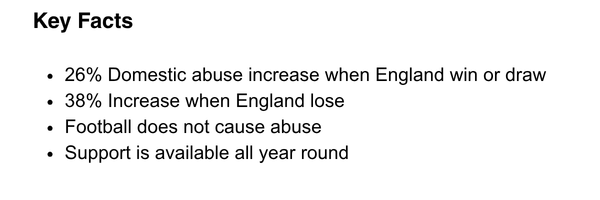
The study found that reported domestic abuse incidents increased by 26% when England won or drew and by 38% when England lost. Importantly, the researchers were clear that football does not cause domestic abuse. Rather, major sporting events can exacerbate existing abusive behaviour and increase the risks faced by those already living with abuse.
These findings continue to inform awareness campaigns today, with organisations including police forces, local authorities and domestic abuse charities using the research to prepare for increased demand during major tournaments.
Behind every statistic is a person
Statistics are important because they help us understand the scale of an issue. But they can never tell the whole story.
- Behind every reported incident is someone whose home no longer feels safe.
- Someone who may be living with fear, coercive control, emotional abuse or physical violence.
- Someone trying to protect their children.
- Someone wondering where they can turn next.
- While millions of supporters celebrate together, charities, refuges, helpline teams, police officers, volunteers and support workers prepare for what can become one of their busiest periods.
- Their work continues long after the tournament has finished.
How businesses can help
Most organisations will never directly experience the realities faced by domestic abuse services. That does not mean they cannot make a meaningful difference.
Corporate volunteering, charitable giving and employee engagement initiatives all have an important role to play in strengthening the organisations that support vulnerable people every day.
At o3e, we have always believed that team building should create a positive impact beyond the event itself.
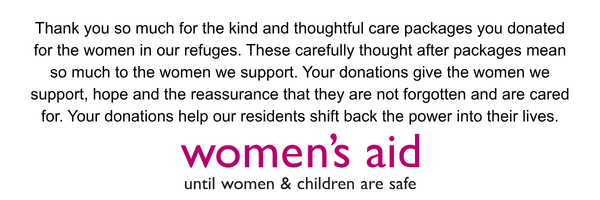
Through experiences such as the Great Philanthropic Challenge and Benevohunt, teams work together to assemble care packs and essential items for charities supporting people rebuilding their lives. Those donations may contain practical everyday essentials, but they also send a powerful message: someone cares.
No single event solves the wider issue of domestic abuse.
However, every donation, every partnership and every act of generosity helps charities continue providing safety, dignity and hope when people need it most.
Looking beyond the scoreboard
Major sporting tournaments remind us how powerful teamwork can be.
We celebrate players supporting one another under pressure. We admire resilience in the face of adversity. We applaud communities coming together behind a common goal.
Perhaps those same values should not end with the final whistle.
As we enjoy the football, let us also recognise those working tirelessly behind the scenes: the charities, support workers, volunteers and community organisations who help people find safety when they need it most.
Success is not measured only by what happens on the pitch.
It is also measured by how we choose to support one another when it matters most.