Charity Team Building Ideas: 12 Events Where a Charity Keeps What You Create and Build
Charity team building means your team spends an afternoon building something real, a bike, a wheelchair, a skateboard, and a charity receives it at the end, usually on the same day. Here are 12 events that work, who each one suits, what gets donated, and what they cost.
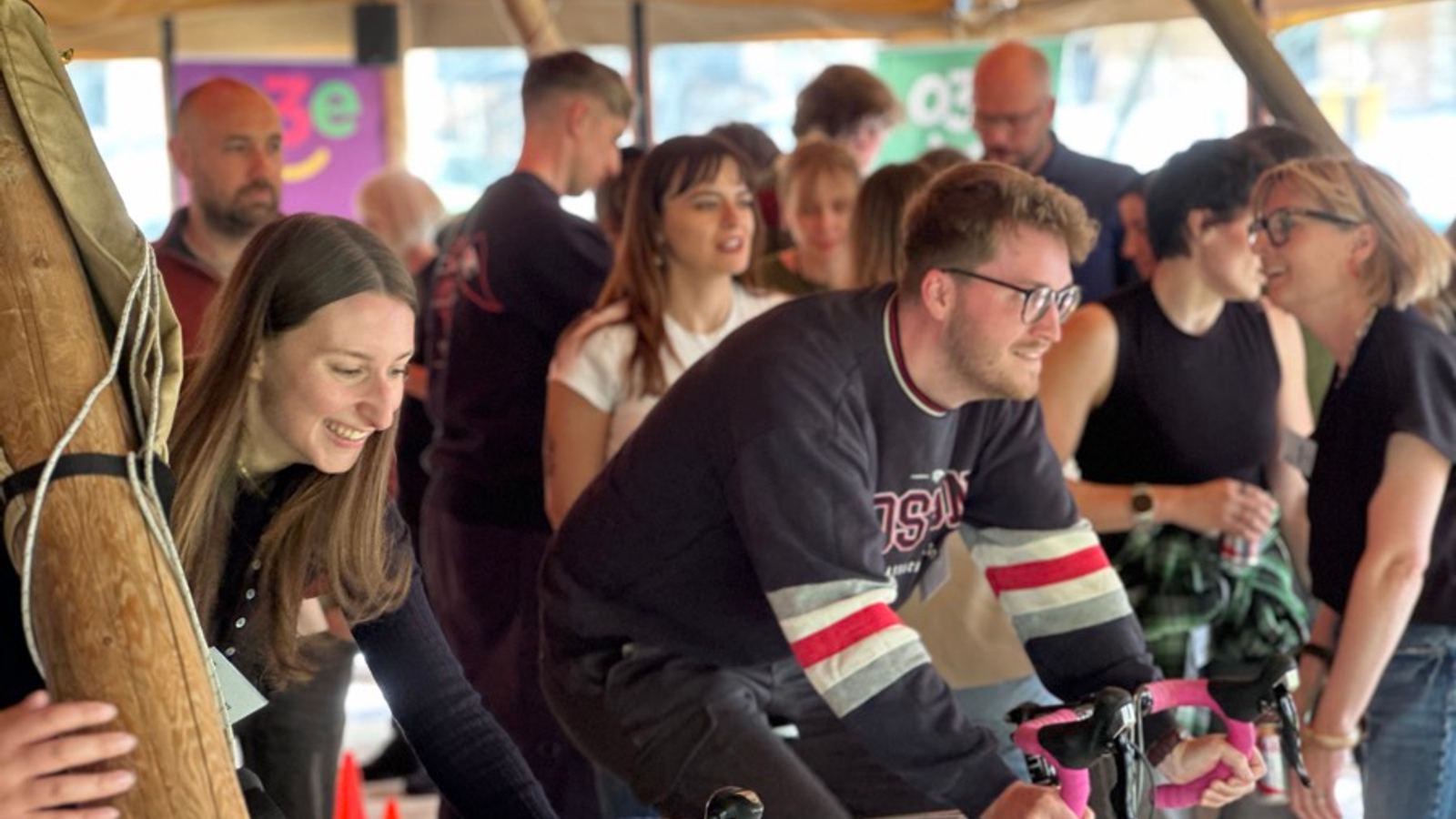
We ran our first charity team building event in 2011. we built Thirty four bikes for the Leaside Project in East London. At the beginning of the event the charity explained to the 200 team builders how they wewre going to change Young Carer’s lives. The thing that struck us then still holds now, everyone remembered the event and the recipients. How do we know? Because we still work with the same client 15 years later.
Since then more than 60,000 people have built something with us, and we have learned which events work for which kinds of team, and which ones sound good on paper but die in a room full of accountants. This guide is that experience, written down.
It covers what charity team building actually is and why it works when other team days do not, twelve events we run and who each one suits, how to choose between them, what they cost, and how to get one booked. If you already have a headcount, you can get a price in about a minute and read the rest later.
What is charity team building?
Charity team building is a team event where the output goes to a charity. The team builds bikes, and the bikes go to people who need them. The build itself is the donation, not something added on top.
That is a narrower definition than most companies use. A team day with a raffle for charity at the end is a team day. A volunteering afternoon painting a community centre is volunteering, and worthwhile, but the fence gets painted whether the team worked well together or not. In a build, the bike does not get finished unless the team does.
It is also not a quiz, a cooking class or an escape room with a charity donation attached. Those leave nothing behind. A charity build leaves equipment, a photograph of it changing hands, and a figure you can put in a report.
Why does charity team building work better than a normal team day?
Most team days go wrong in one of two ways. Either the activity only needs a few people at a time, so the rest watch, or there are twenty separate things to do and the room never does anything together.
A build fixes both at once. Every person has a job, because a bike needs hands on the frame, hands fetching parts and hands running the challenges that earn them. And the whole room shares one moment at the end, when the charity collects.
There is a third reason that matters to the person who signed off the budget. A normal team day produces a group photo. A charity build produces five bikes, a named charity and a date, which is a sentence with a number in it. Our guide to CSR team building explains how to put that in an ESG report.
How does a charity team building event run?
Whichever of the twelve you pick, the shape of the day is the same. We turn up before your team with the kit, the tools and the crew, and we set up in your meeting room. Your team builds for one to three hours while our crew runs the session from the front. Then the charity receives the donation, almost always the same day and wherever we can in front of your people. We send you the photographs and the donation figures afterwards.
Your part is a room, a date and a rough headcount. Nothing else lands back on you, and there is no second supplier to manage. How it works has the full run through.
12 charity team building ideas that work
1. Charity Bike Build
This is the one many teams book, and the one we started with. Teams of up to eight learn through knowledge sessions, earn through team challenges and turn a box of parts in to a brilliant opportunity. The challenges, some physical and some mental, help accesories the bike with essential items. Taking responsibility, cooperating, helping and clear communication is where the team building actually happens.
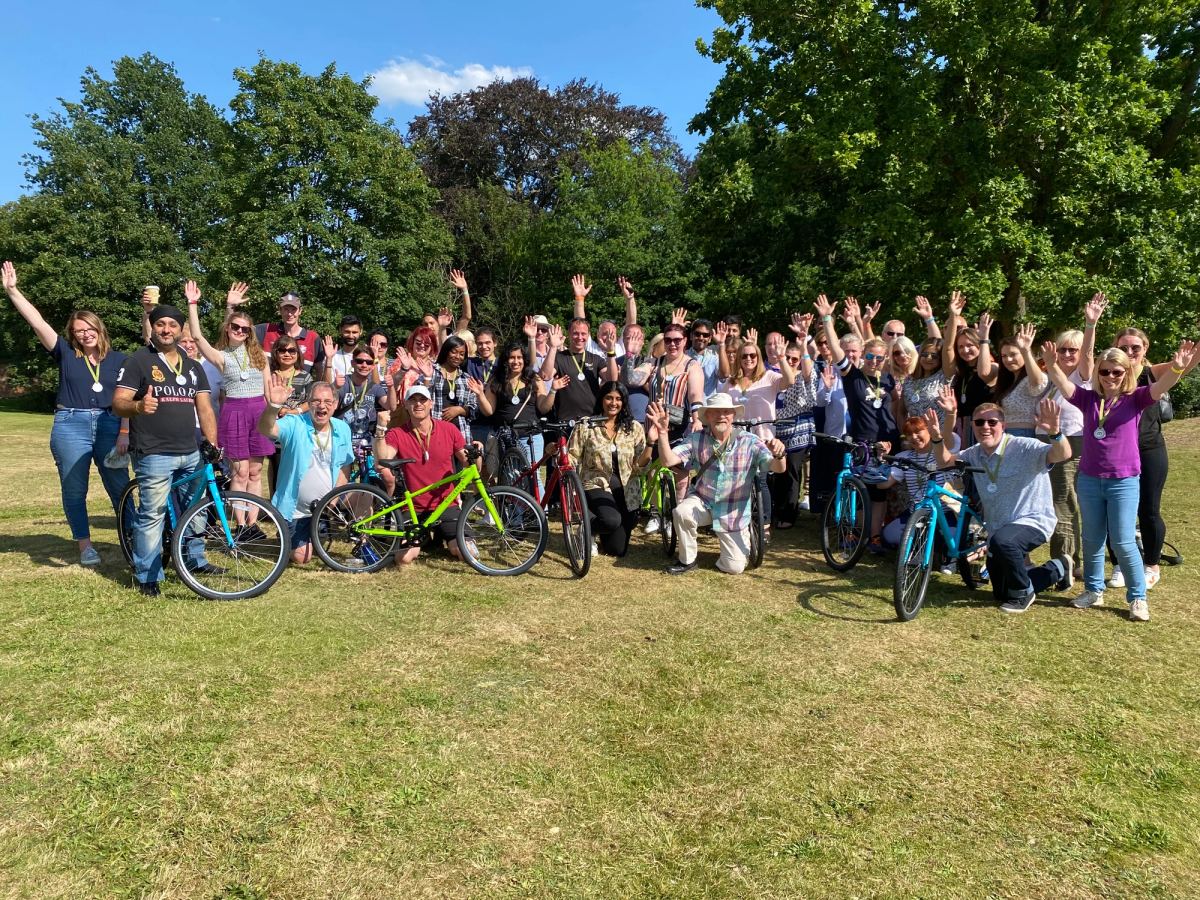
Every bike is safety checked by our qualified mechanics before it leaves the room. Then it goes to someone leaving a hostel, a young carer or a someone recovering from serious illness with a helmet, lock, lights and pump, delivered the same day. More than 3,000 bikes have gone out this way.
It suits almost any group. Competitive teams race against the clock, quieter teams settle into the build, and both end up with a bike. Suitable for 8 to 2,000 people, indoors or out, and lasts two and a half hours. See the Charity Bike Build.
2. Performance Wheelchair Challenge
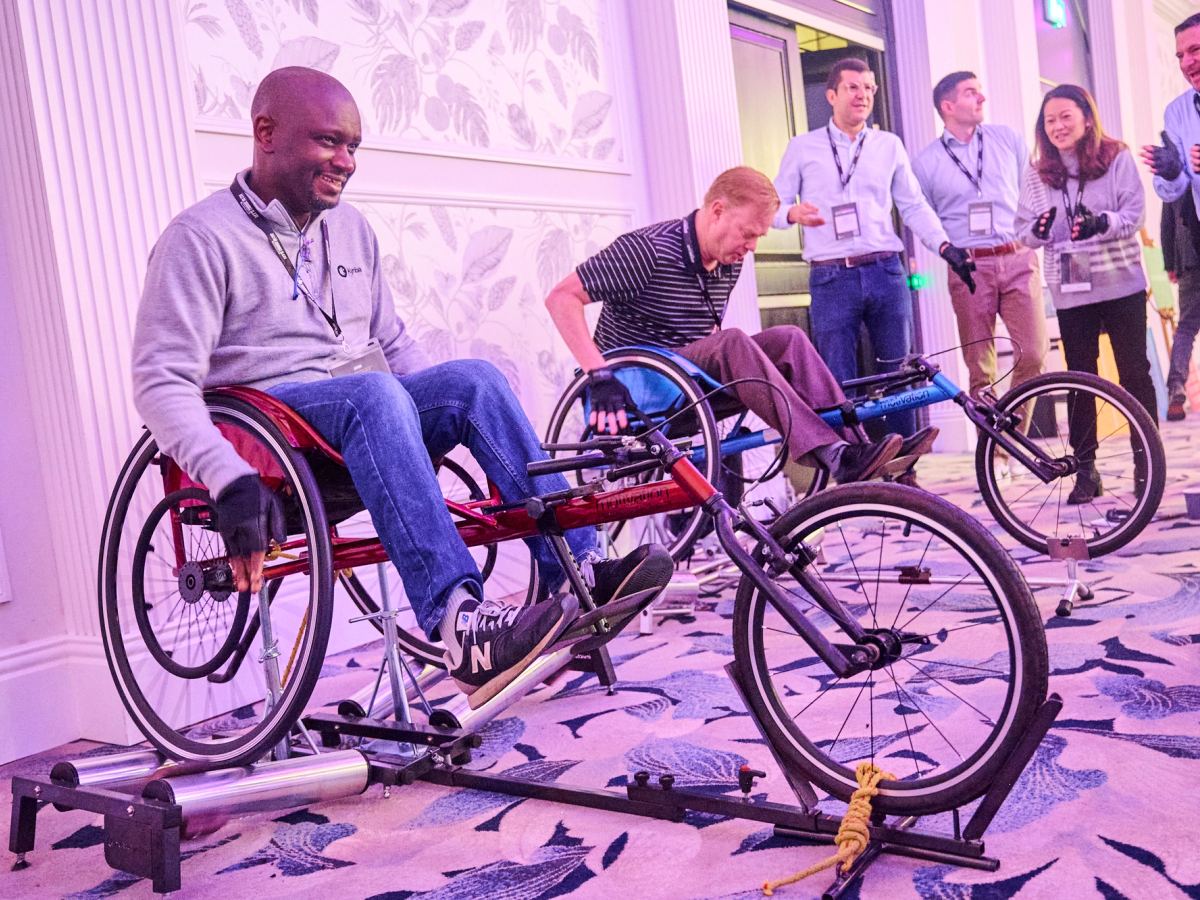
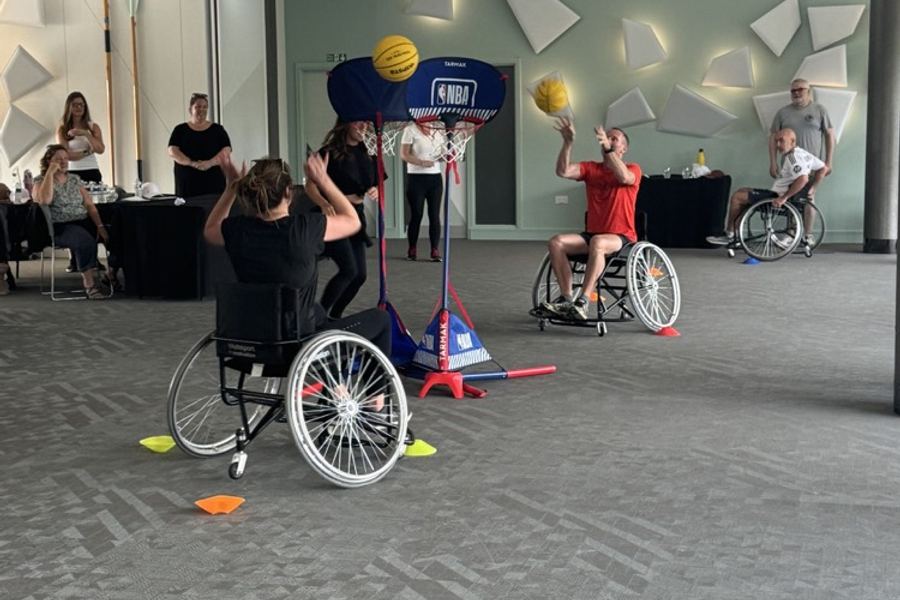
The most physical event in the range, and the one with the longest lasting donation. Teams compete in a series of Paralympic inspired challenges to gain the parts required to build their wheelchair
The chairs go to grassroots inclusive sports clubs and SEND schools, and each one gives a young person years of access to sport. 346 have been donated so far.
It suits energetic groups and sales teams, and it lands especially well with health and pharma audiences, who already understand why equipment matters. Suitable for 10 to 300 people, two to three hours. See the Performance Wheelchair Challenge.
3. OnBoard Skateboard Build
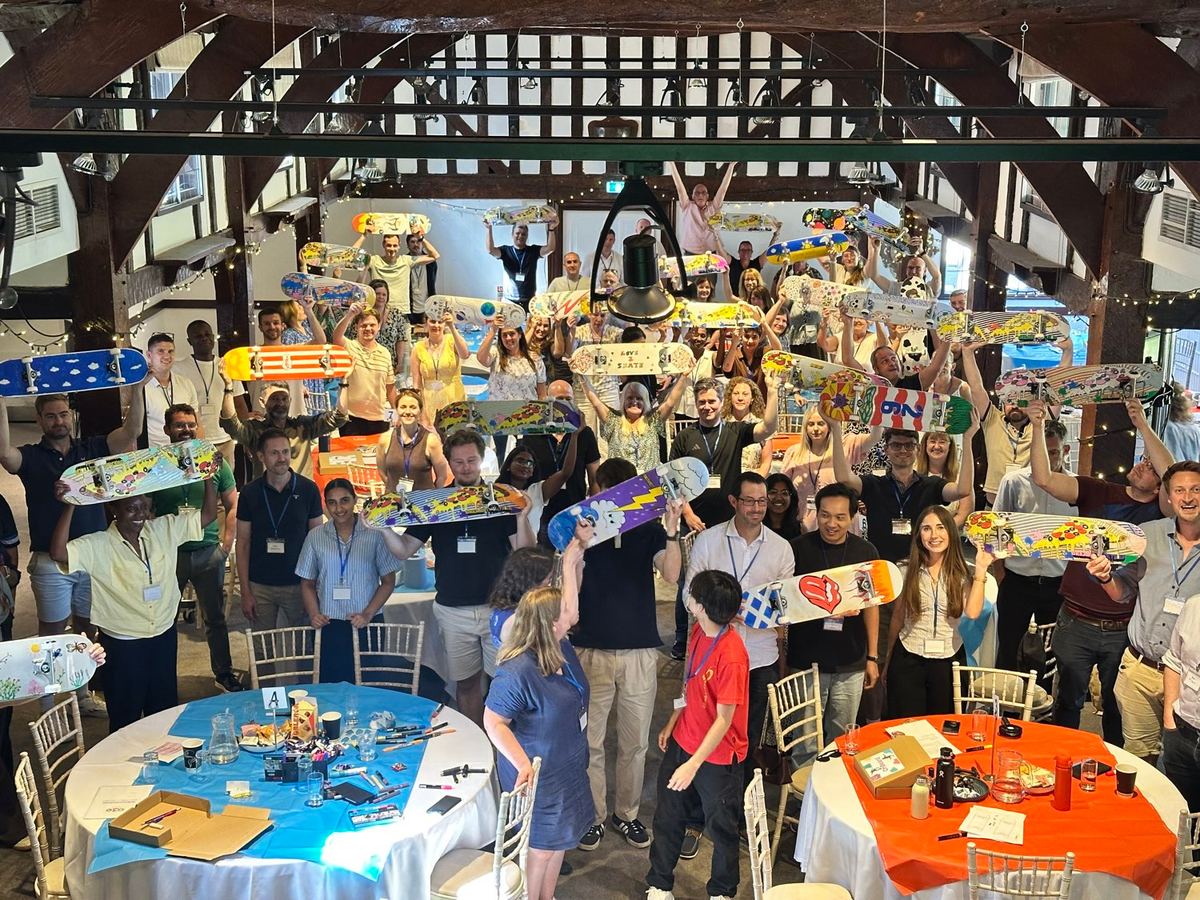
The creative one. Each team designs and builds two skateboard decks, one blank for the artists and one templated so that everyone can start straight away. It is absorbing, almost meditative work, and groups regularly surprise each other with design and assembly skills nobody knew were in the building.
The boards go to children and young carers living in poverty, and to youth projects where a skateboard was never going to be bought. Over 1,700 have been donated. A Custom Art Deck option lets one design span every board so the whole group makes a single piece of artwork.
It suits creative teams, tech teams, small groups and anyone who would rather not be timed. Suitable for 6 to 500 people, about two hours, indoors. See OnBoard.
4. The Hand Project
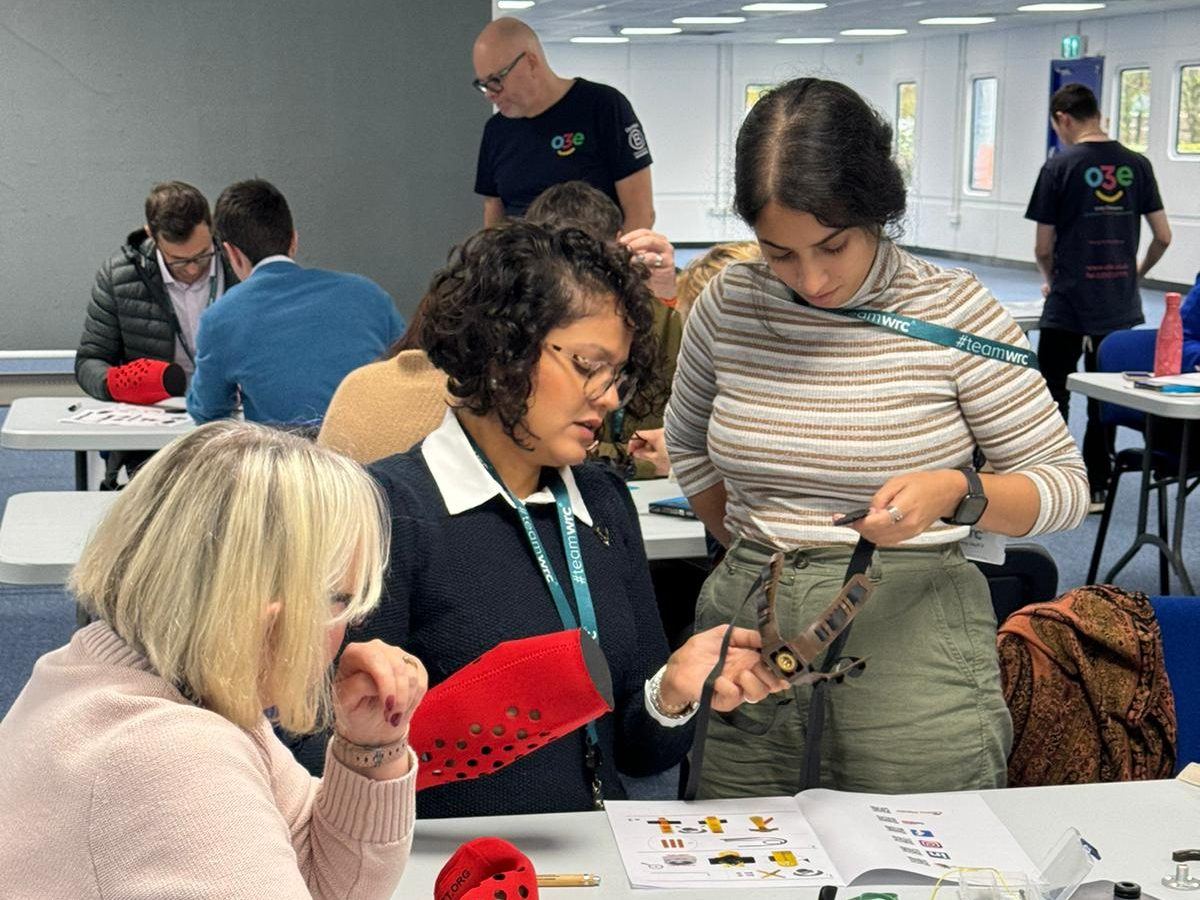
The quietest event we run, and the one people bring up months later. Teams assemble mechanical prosthetic hands, this is quietly humbling. Patience with each other arrives long before patience with the parts.
Each hand goes to an upper limb amputee in a country with no health service to fall back on. Of the world's three million upper limb amputees, 2.4 million live in exactly those countries, and a hand gives someone back the ability to hold their own child. We are The Hand Project's UK partner, and feedback from recipients arrives three to six months later.
It suits reflective teams, healthcare audiences and smaller groups. Suitable for 8 to 200 people, two hours, indoors. See the Hand Project.
5. The Great Philanthropic Challenge
The most flexible event, because the outcome can be shaped around a cause you already support. Six Crystal Maze style challenges, some physical and some cerebral, and every win drops another item into a care package. Teams learn quickly that spreading out beats crowding the challenge they like the look of.
The receiving charity writes the list, so the packs go exactly where they are needed, whether that is a refuge, a homeless shelter or a children's cancer ward. 631 have been delivered so far, each arriving on a day somebody badly needed good news.
It suits competitive teams, leadership groups who want a named charity in the report, and large conferences. Runs for 8 to 2,000 people, two to two and a half hours, indoors or out.
6. Scooter Dash
The easiest ‘yes’ in the range, because it fits inside a meeting. Fifty minutes on the clock, a scooter to build and a safety check to pass. No team finishes in time without dividing up the work in the first two minutes, which is the whole lesson.
The scooters are fully recyclable, with recycled rubber wheels, and they go to a local children's charity the same day. It suits a one hour slot in a conference, a crowded agenda, or the gap before a Christmas dinner. Works for 10 to 500 people, indoors.
7. Fun House Challenge
Harder than it looks once the brief lands. Teams build and paint a wooden playhouse to instructions written for them by children. Overalls and floor covering are provided, so it runs in a hotel function room without anyone worrying about the carpet.
The finished house goes to a children's centre, hospice or refuge, where staff use it in play therapy as well as play. It suits creative groups and anyone who likes making something you can stand inside. Works well for 8 to 400 people, two to two and a half hours.
8. Get Ahead Challenge
Ten people, ten headboard panels, one design. Each person decorates a panel, then the team assembles a complete bed, frame and mattress included. Every panel has to match its neighbours, so communication is the real test.
The bed goes to a child who has never had one of their own. Barnardo's put that number at 894,000 UK children in 2023, which tends to stop the room for a moment when the crew mentions it. It suits mixed teams and anyone who wants a donation that is easy to picture. Runs for 10 to 300 people, two and a half hours, indoors.
9. Flying Start
The one tech teams pick. Build a drone, write the code that flies it, then race it through an obstacle course with the rest of the room watching. Whether it takes off depends on how well the coders and the assembly crew talk to each other, which is not a bad summary of most software companies.
The drones go to primary, secondary and SEND schools, where they support STEM lessons long after your team has gone home. It suits tech and software teams and any group with a logical streak. Runs for 6 to 300 people, two to two and a half hours, indoors.
10. Adapted Musical Instruments
The rare event that suits creative and logical people equally. Build it, code it, decorate it, then play it in front of everyone. The build rewards the logical half of the room and the decoration rewards the creative half, and no team reaches a recognisable tune without both.
The instruments go to SEND schools, hospitals and music groups, and give someone who has never played a note the chance to make music of their own. It suits mixed groups where half the room would build and half would paint. Works for 10 to 250 people, indoors.
11. Make Sense Team Challenge
The event that changes how people listen. Teams build sensory story bags from recycled materials, shaped with Joanna Grace of The Sensory Projects. Along the way the team loses one sense at a time, so they feel the gap they are building for.
The bags are used in play therapy with children and adults living with autism, a learning disability or dementia, where the right texture or sound can bring someone back into the room. It suits healthcare and professional services teams, and any group where empathy is the point. Suitable for 10 to 250 people, two and a half to three hours, indoors.
12. Clean Air Machines
The newest event in the range. Teams win our oZone charity currency through climate challenges, then spend it on the parts for a Clean Air Machine. Buying under time pressure on a budget that never quite stretches is where the negotiating starts.
The machines go to local classrooms and community spaces, and pupils can take them apart afterwards as a STEM lesson. They have been tested by the University of Sussex. It suits teams with a sustainability goal and tech teams. Runs for 8 to 200 people, one and a half to two hours, indoors.
How do you choose a charity team building event?
Start with the group, not the activity. After fifteen years we can usually tell within a minute of hearing about a team which two or three events will land, and the pattern is simple.
- Competitive teams want the pressure. Bike Build, Wheelchair Challenge, Great Philanthropic Challenge.
- Creative teams want to make something that looks like theirs. OnBoard, Fun House, Adapted Musical Instruments.
- Quiet or reflective teams want meaning over noise. The Hand Project, Make Sense.
- Tech teams want to build and code. Flying Start, Clean Air Machines.
- A one hour slot has one answer. Scooter Dash.
- A cause you already support points at the Great Philanthropic Challenge, because the charity writes the list.
- Six to twenty people suit OnBoard, Flying Start or our Small Group Challenges.
- Two thousand people at once means the Bike Build or the Great Philanthropic Challenge.
If the group is mixed, which most are, the Bike Build is the safe choice. It has enough competition for the loud ones and enough building for the quiet ones.
How much does charity team building cost?
Prices are a total for the group, set by size band, and the band is tied to how much gets built. Up to 16 people on the Bike Build means two bikes and costs £2,995 excluding VAT. Up to 40 people means five bikes and costs £4,703. Two hundred people build 25 bikes for £17,819. OnBoard is the lowest entry point for a facilitated event at £1,779 for up to 12 people.
The price includes the crew, the kit and the equipment that goes to the charity, and it is the same anywhere in the UK on any date. Our guide to what charity team building costs has the full figures for every event. If the budget is tight or the team is spread across offices, a DIY kit posted to you does the same job without the crew, for less.
How to book a charity team building event
1. Decide what the day is for. Engagement, a figure for the CSR report, a slot filled in a conference, a charity supported. Usually it is two of those, and knowing which two narrows the list fast. 2. Count the room. A rough headcount and a rough date is all we need to quote. If you sit just over a size band, say so, because it changes how many bikes get built. 3. Get the three that fit. Use the price tool and you will have three events with prices in about a minute. 4. Name the room. A meeting room, a function room, a conference hall. Tell us the size and we will confirm the fit. 5. Turn up. We bring everything else.
The bottom line
Charity team building is a team day that leaves something behind. The build gives every person a job, the handover gives the whole room one moment, and a charity ends up with equipment it could not otherwise afford.
Pick the event by the team you have and the outcome you want. The rest is ours to organise, and the van at the end is still the part people talk about.
Questions we get asked
How many people do you need for charity team building?
From 6 to 2,000. Small groups suit OnBoard, Flying Start or the Small Group Challenges, which are built for six to twenty people. Large conferences suit the Bike Build or the Great Philanthropic Challenge, both of which run for up to 2,000 people at once.
How long does a charity team building event take?
Most events take between one and three hours. Scooter Dash runs in fifty minutes, and the Bike Build and most of the others take two to two and a half hours.
Do we need a special venue?
No. Almost every event runs in a room you already have, such as a meeting room, a hotel function room or a conference space. We bring the kit, the tools and the crew, and we deal with the venue on access and floor protection.
What happens to what we build?
A charity collects it, almost always the same day and usually in front of your team. Bikes, wheelchairs, scooters and skateboards go straight to the people who need them.
Can we choose the charity?
Often, yes. We match you to a charity that fits what your business cares about, and for the Great Philanthropic Challenge the charity writes the list of what goes in the care packages.
Does it work for people who hate team building?
Yes, and they are usually the ones who say so afterwards. There is no fitness element, nothing that puts an individual on the spot, and a real reason to be in the room. The build gives everyone a job rather than an audience.
Is o3e a B Corp?
Yes. o3e is a certified B Corporation, independently verified on how it treats its people, its charity partners and the planet.
Events mentioned in this piece
VINCI
Took our logistical pain away.
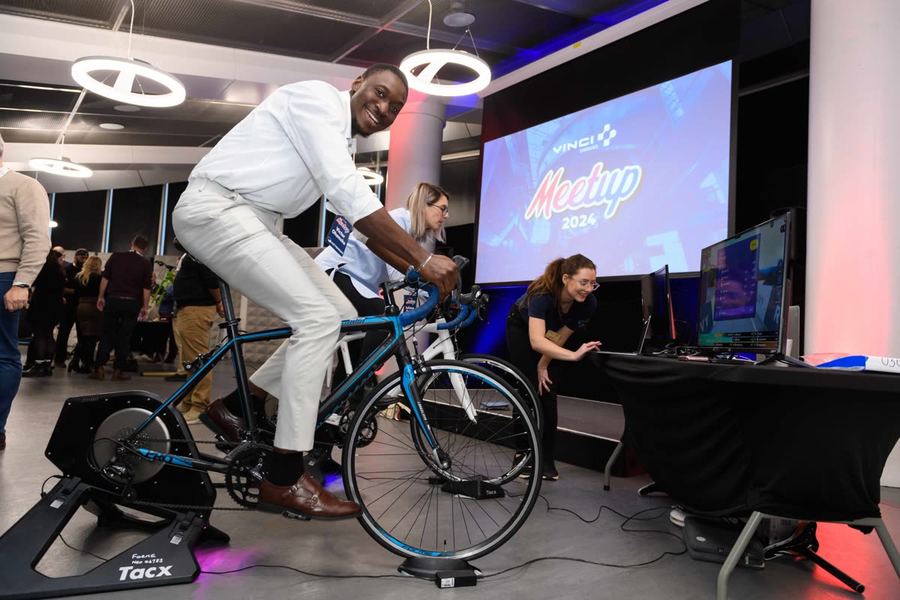
All attendees who gave us feedback have thoroughly enjoyed the activities and having been involved in other previous team building activities in the past they were really pleased that the activity had a meaningful purpose. From an organiser’s point of view, the team were very accommodating and took our logistical pain away by liaising directly with the venue so that we could concentrate on the rest of the event.
Bruno, Charity Bike Build
Kyriba
By far the best team building activity I have ever seen.
Having surveyed the team, this was one of the highest ranked sections of our 2.5 day conference. The session from o3e was exceptional, great team building activity and an amazing cause. Very proud of Kyriba, the leaders and organisers for having brought o3e to this event.
Gill, Performance Wheelchair Challenge
BlackRock
Great variety, within budget.
o3e offered a great variety of team building activities, within budget, charity focused and enjoyable. o3e made the event really easy to organise and created a fun and enthusiastic atmosphere for the group. The team on site were organised and interacted well with everyone so they could complete the activity.
Andrea, OnBoard Skateboard Build
VINCI
Took our logistical pain away.
All attendees who gave us feedback have thoroughly enjoyed the activities and having been involved in other previous team building activities in the past they were really pleased that the activity had a meaningful purpose. From an organiser’s point of view, the team were very accommodating and took our logistical pain away by liaising directly with the venue so that we could concentrate on the rest of the event.
Bruno, Charity Bike Build
Kyriba
By far the best team building activity I have ever seen.
Having surveyed the team, this was one of the highest ranked sections of our 2.5 day conference. The session from o3e was exceptional, great team building activity and an amazing cause. Very proud of Kyriba, the leaders and organisers for having brought o3e to this event.
Gill, Performance Wheelchair Challenge